
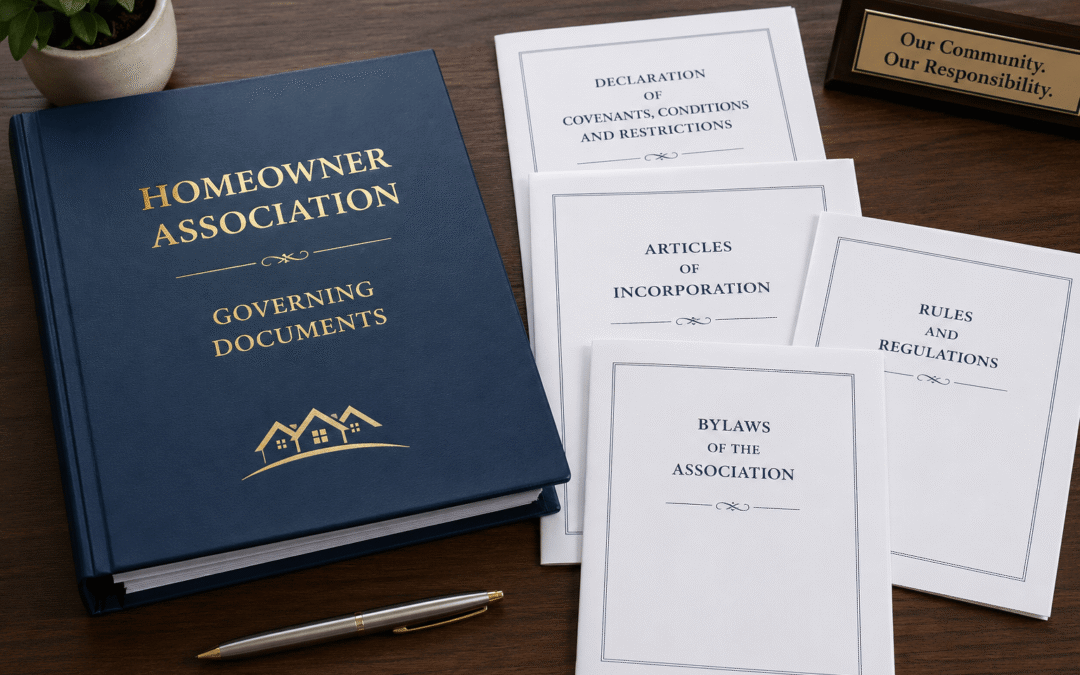
One of the central reasons that community associations are created is to enforce an association’s governing documents. These governing documents may regulate architectural changes, landscaping, parking, rentals, pets, signs, exterior maintenance, and other aspects of community living.
Generally, a community association’s Board of Directors (the “Board”) has discretion in deciding how to enforce the association’s covenants and rules. However, that discretion is not unlimited. One issue that frequently arises is whether an association has selectively enforced a covenant or rule against one owner while ignoring similar violations by others.
This article will discuss selective enforcement in Washington community associations, how Washington courts have analyzed the issue, and what owners and Boards should consider when enforcement becomes inconsistent.
1. What Is Selective Enforcement?
Selective enforcement generally occurs when an association enforces a covenant or rule against one owner, but does not enforce the same covenant or rule against other similarly-situated owners.
For example, if an association fines one owner for maintaining an exterior structure that violates the governing documents, but knowingly allows several other owners to maintain the same type of structure without consequence, the fined owner may argue that the association is selectively enforcing the governing documents. However, not every difference in enforcement amounts to selective enforcement. Different facts may justify different outcomes. A Board may reasonably distinguish between violations based on the location of the violation, the severity of the violation, the timing of the violation, prior approvals, available evidence, safety concerns, or the language of the governing documents. In other words, the question is not simply whether other violations exist. The question is whether the association is treating similar violations of the same covenant differently without a reasonable basis.
2. Selective Enforcement Under Washington Common Law
Washington courts have recognized equitable defenses that may prevent enforcement of a restrictive covenant, including waiver, estoppel, laches, acquiescence, changed neighborhood conditions, and abandonment.[1] Selective enforcement in Washington is often analyzed through the doctrine of abandonment. A covenant may be considered abandoned when it has been habitually and substantially violated, and nothing has been done in response. A few isolated or minor violations generally will not be enough to deem the covenant abandoned. This is important because an owner raising a defense of selective enforcement must usually do more than point to unrelated violations in the community. The owner should be prepared to show that other owners violated the same covenant being enforced and that the association failed to act despite knowing of those violations.For example, if an association is enforcing a covenant prohibiting exterior antennas, evidence that other owners violated unrelated landscaping or parking restrictions may not be sufficient. The relevant question is whether the association failed to enforce the same antenna covenant, and whether that non-enforcement was substantial enough to show abandonment or unfair selective enforcement.
3. WUCIOA and Arbitrary or Capricious Enforcement
For communities governed by the Washington Uniform Common Interest Ownership Act (“WUCIOA”), RCW 64.90.405 provides additional guidance regarding association enforcement authority.Under RCW 64.90.405, an association may enforce its governing documents and, after notice and an opportunity to be heard, impose reasonable fines for violations of the governing documents in accordance with a previously established schedule of fines.[2]
WUCIOA also recognizes that a Board is not required to pursue every possible violation. A Board may decide not to take enforcement action if, under the facts and circumstances presented, the association’s legal position does not justify enforcement, the restriction may be inconsistent with law, the violation is not material enough to justify association resources, or enforcement is not in the association’s best interests.[3]
At the same time, WUCIOA provides that a Board may not be arbitrary or capricious in taking enforcement action.[4] This means that while a Board has discretion, that discretion should be exercised consistently, reasonably, and with reference to the governing documents. Currently, RCW 64.90.405 only applies to community associations formed on or after July 1, 2018. However, on January 1, 2028, RCW 64.90.405 will apply to all community associations.
4. What Evidence Matters?
An owner asserting selective enforcement should be prepared to develop a factual record. General accusations that “other people are doing the same thing” are usually not enough. Helpful evidence may include:
- The specific covenant or rule being enforced;
- The names or addresses of other owners allegedly violating the same covenant;
- Photographs of comparable violations;
- Evidence that those properties are part of the same association;
- Evidence that the Board knew about the other violations;
- Evidence that the Board failed to take enforcement action;
- Prior approvals or variances granted to other owners;
- Meeting minutes, violation records, or architectural committee records;
- Correspondence with the Board or community manager; and
- Evidence showing that the other violations are material, not minor or temporary.
A recent unpublished Washington Court of Appeals decision illustrates this point. In McFarland Farm Property Owners’ Association v. Ryan, the owner argued selective enforcement and submitted photographs of other properties. The court rejected the argument, in part, because the record did not establish whether those properties were actually within the association or whether the association had taken enforcement action against those owners.[7]
The lesson is practical: photographs may help, but photographs alone are often not enough. The owner should connect the evidence to the same covenant, the same association, and the association’s enforcement history.
5. The Takeaway
Selective enforcement is a real issue in Washington homeowners associations, but it is not always a simple stand-alone claim. In many cases, it functions as an equitable defense to an association’s enforcement action. Under Washington common law, the issue is often analyzed through an abandonment defense: whether the association has habitually and substantially failed to enforce the same covenant. For communities governed by WUCIOA, an owner may also look to the statutory prohibition against arbitrary or capricious enforcement.
For Boards, the best protection is consistency, documentation, and reasonable decision-making. For owners, the best argument is one supported by specific evidence of comparable violations and inconsistent treatment.
Community associations do not need to pursue every minor violation. But when an association chooses to enforce its governing documents, it should be prepared to show that it did so fairly, reasonably, and consistently with its authority.
[1] Mountain Park Homeowners Ass’n, Inc. v. Tydings, 125 Wn.2d 337, 883 P.2d 1383 (1994).
[2] RCW 64.90.405(2)(l).
[3] RCW 64.90.405(8).
[4] RCW 64.90.405(9).
[5] McFarland Farm Property Owners’ Association v. Ryan, No. 57231-1-II, unpublished opinion, Washington Court of Appeals, Division II, Jan. 9, 2024.
Recent Comments